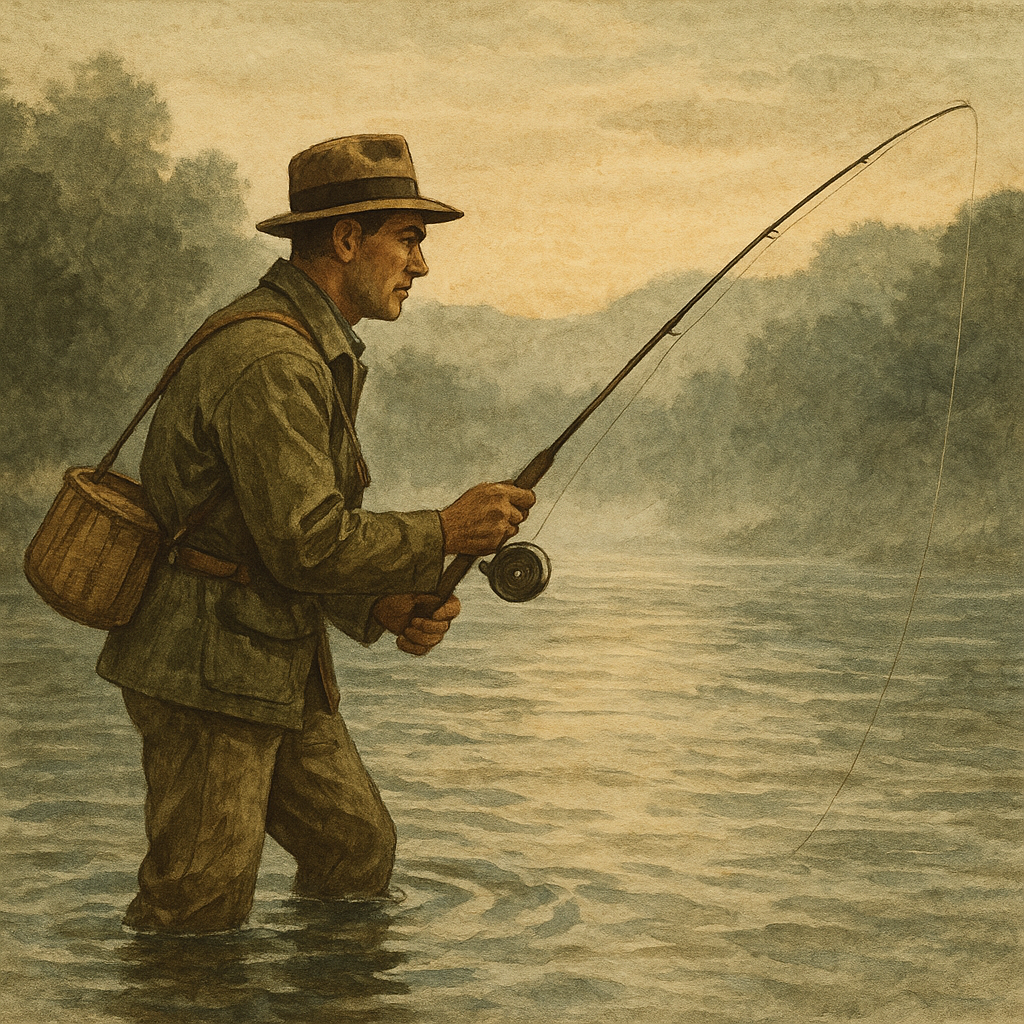
Greenbrier River Echoes: Brown Trout and Smallmouth in Clear Riffles
The Greenbrier is a river that keeps its own counsel. I left Fayetteville with the New River still in my ears, a dull roar behind the hill, and drove east for about an hour. The road narrowed. Trees closed in. Then a river sprang from the land, pale and bright in the late light. This was the Greenbrier, West Virginia’s clean-hearted stream. The water ran with a cold ease, clear and quick in the riffles. I waded in with a light touch, boots firm, breath even. I came for two fish in two hands. Brown trout and smallmouth, both possible here when the season is patient and the river is honest.
The morning began with a cast into a shallow seam just under a gravel bar. The current dressed the water in glassy lines. A brown trout rose where the current met a pale sun over the far bank. It did not come. Instead a smallmouth bass lifted, a quiet flick of a tail, and he was gone, already thinking in a different water. It was not a hunt of big trophies today, but a patient lay of the land, a reading of the riffle’s breath. The Greenbrier speaks softly, but it speaks true. The trout here mean business in the mornings, stocky and wary. The smallmouth, too, find the edges and the drop-offs where the water gathers speed behind a rock, where shade holds and the fish hide from the bright day.
I picked a line and taught my hands to remember. The rod felt good in my grip; the river seemed to approve. You don’t face water this clean without a stubborn respect. The sun climbed and with it the river’s temperature rose just enough to wake the edge life in the shallows. I worked the fly with a rhythm earned from years of listening to water. A light strike, a missed take. Then a solid take. The brown trout came in at the edge of a riffle, a quick turn, then the run. It told me I was only borrowing its day. I slipped the net beneath it and watched the river carry the moment away with the current. The fish looked back once, as if to say, “You’re not done with me yet.” And I wasn’t.
The day’s other promise lay in the deeper pockets, where the smallmouth lay thick with sun on their backs. They flashed a copper-green shoulder and then vanished, as if the river had blinked. I learned to keep my rod tip high, the line skimming over the surface, avoiding the heavy water that would drag the fly down and the patience from my arms. Each cast posted up against the current’s edge. Each retrieval pulled the river’s heartbeat into the line. The smallmouth came in small, stubborn bursts, then faded back to the long, clean line of the riffle. If there was a lesson here, it was that the river does not yield for anyone who asks. It yields for the curious, the quiet, the patient.
By afternoon I cleared the riffles and followed the river where it slowed. The river felt like a road used by men with a compass. It was time to move, to tell the next mile that I was coming. The radio in the truck hissed. Lake Erie loomed in the mind—the way Cleveland sits on the lake, the way water travels in different ways across the map. The next stop is Ohio, and the road there runs through a different country of walleye and dunes. But today was Greenbrier, clean and sharp, with trout and bass that looked at you with a challenge in their eyes and let you answer with your own steady breath.
Gear Used
- Orvis Clearwater Fly Rod 5wt — sturdy, responsive for clear riffles
- Lamson Liquid Fly Reel 5+ — smooth retrieve, light on the wind
- RIO Gold Fly Line — cuts through current, tight loop control
I learned that water and rhythm are kind to a careful hand. The river teaches you to read water and to leave a little patience in your pocket. If you rush, the moment escapes. If you listen, it returns.
On to Lake Erie, where the lake’s edge will greet the road again.