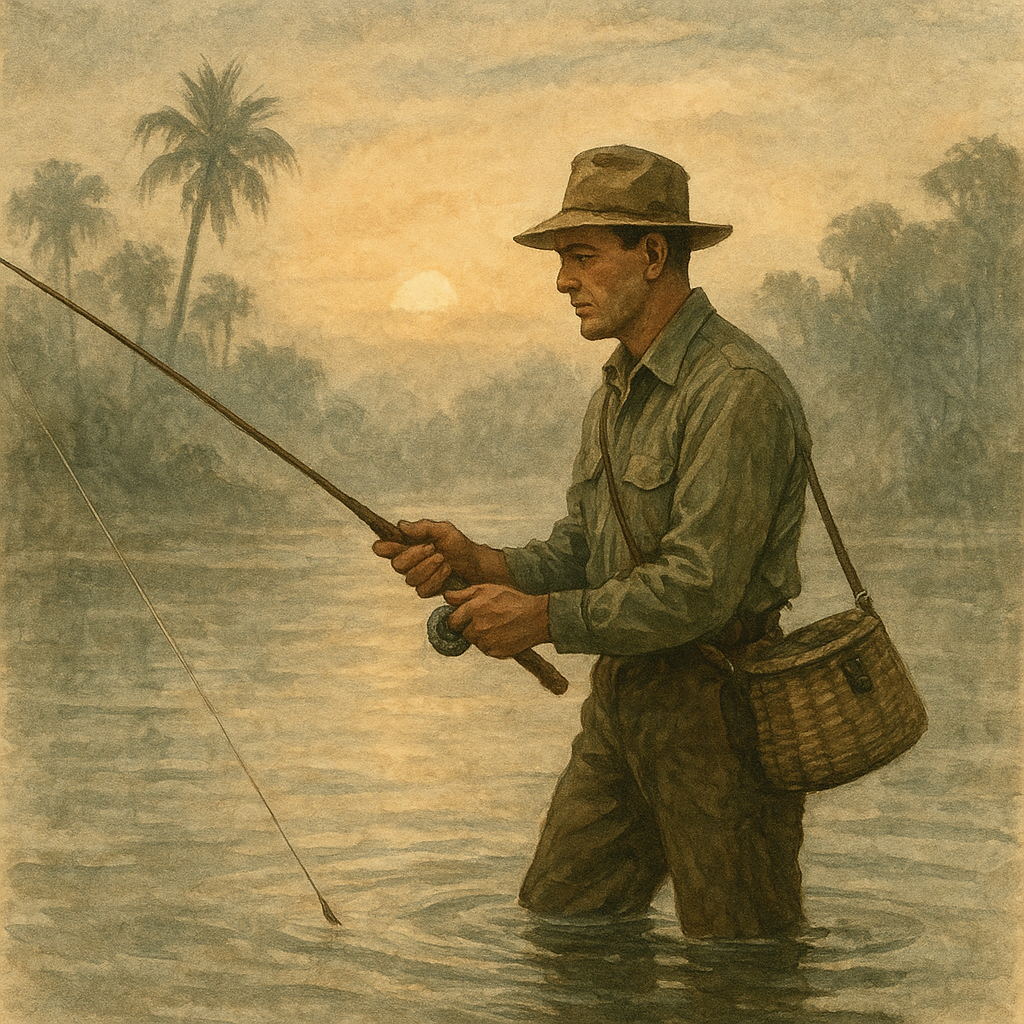
Snook, Redfish in the Ten Thousand Islands: A Saltwater Test
The highway cut up the map and put me in Everglades City, a hinge between sea and jungle. The day began with heat on the hood and a sky that wore its blue thin as a blade. I drove from Key West, two hours at most when the wind is honest and the road is straight. The Hemingway Home faded behind me like a story half-told. The salt air began to find its way into the truck, a reminder that I am on a route with water at every turn.
In the mangrove backcountry the water is slow to move and quicker to read. The Ten Thousand Islands hold their breath in little channels, then exhale with a lazy strength. I found a gut that split the mangroves, a dark corridor where the tide pinches the mud and the sun sprays green down the branches. Snook favorites haunt those lanes, and redfish shoulder through every pinch of shadow with a tail that tells you when to blink.
The first snook came on the first cast, a fighter who did not want to be pressed into a lesson. He slapped the bait like a question and hooked late, as if to remind me that timing is a patient thing. I pulled him clear of the mangrove roots and watched the water throw back a ring of light. The fish fought with the kind of stubborn quiet that makes a man keep his own voice low. There is room in this place for endurance and for humility, and both arrive when you accept that water will not bend to your will on your timetable.
Redfish slipped through on the outgoing. They swim in schools that look at you like a stubborn, living compass. When you drift a shrimp below the shade of a pontoon of mangroves, you are listening to the hush between breath and splash. A redfish will take you by the wrist and pull you toward the next shadow, then drop you with a set of scales that shines like wet coins on a kitchen table. The fight is not long, but it is honest, and it teaches you to keep your eye on the water, not the fish’s mouth.
I moved the boat with the patience of a man who learned the sea by mistake and kept coming back. The water stayed salt, the air stayed warm, and the mangroves kept their quiet counsel. When the sun scraped the trees and pressed the day into gold, I tucked the gear to rest and listened to the water’s thin, tireless conversation. I was a traveler with a map that never fully explains the coastline, and this coast asked me to be quiet long enough to learn what the fish already know.
The Everglades drew a line on the edge of Georgia—my next stop would be the Savannah River. The road would swing inland, and with it, the pace would change. But for a moment I stood with the backcountry, feeling the brine settle in my lungs and the horizon widen just a touch. The boats, the nets, the mangrove roots—all observed, none forced. It is a simple truth here: the water is in charge, and the angler moves with the water, not against it.
Gear Used
- Grundens Neptune Bibs — rugged protection in briny spray
- Costa Del Mar Fantail PRO Sunglasses — clear eyes against glare
- Hobie Mirage Passport 12 Kayak — quiet move through mangrove lanes
The back country will tell you what you need to know if you listen. Nubbed hooks, good glass, and a boat that won’t fight you back. I learned that the pain of a quick misread water is worse than a bad cast, and the best days are the ones where you leave a little of your pride on the bank and take home water-line learning.
The road to Savannah waits, and the river will ask its own questions.
Gear Used
- Buff Original Multifunctional Headwear — sun and sweat guard for the trek
- Seaguar Blue Label Fluorocarbon Leader — line that holds true under pressure
- Shimano Stradic FM Spinning Reel — smooth, steady cast and retrieve
Reflection: I learned to read water as a conversation. What worked was patience and steady hands on the rod. What failed was the urge to rush a bite. The mangroves asked for respect, not bravado, and so I moved as the tide did, slow and sure.
On to the Savannah River, with the same salt memory tucked behind my ear.