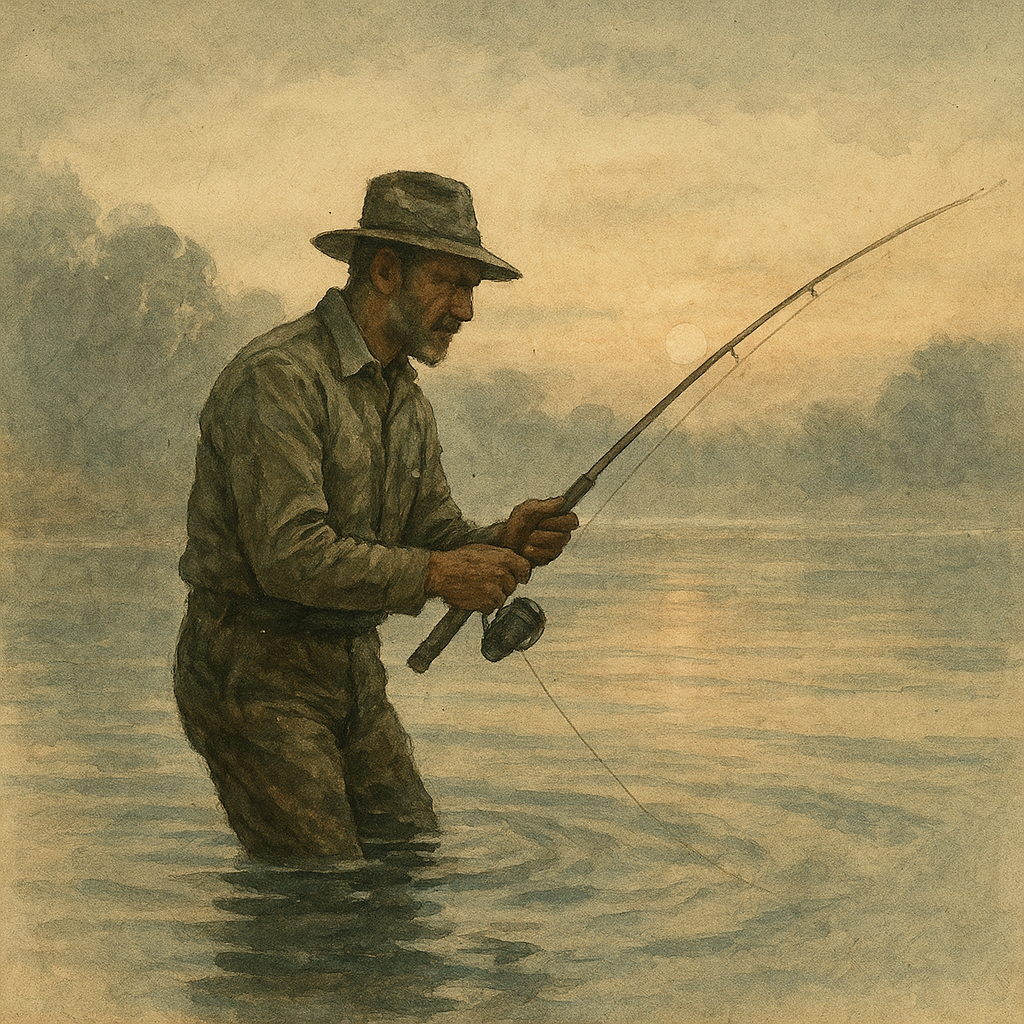
Lewes on the Delaware Bay: Striped Bass and Bluefish on a Cold Tide
The day came with a pale sun. The water held a gray edge. Salt air moved through the inlet like a brief wake. I had driven from Assateague Island, Maryland, about an hour, chasing a story and a bite. The highway hummed with winter light. Lewes sat quiet, a corner of Delaware Bay where currents turn the bluefish and the striped bass loose. The tide moved, and with it, the work of fishing began.
The shoreline near Lewes is a place for listen and patience. The inlet tides push water into the bay, then pull it back, a rhythm you feel in the line, in the feel of your hands on rod and reel. I waded softly, boots gripping the sand and shell, not crowding the fish, not forcing a moment. The air tasted of salt and old stories. Bluefish flashed in spots, their bodies quick as rumor. Striped bass moved with the current, a steadier breath, older and heavier than the bluefish’s spark.
I chose a simple plan: stay with the current, pick a depth where the bottom looked like a rising road, and cast toward the darker water beyond the break. The fishing called for a quiet rhythm. I worked a fly and spinner with careful timing, letting the water carry the lure to where the fish kept their hush. A strike came as a hard question, a moment of decision. The line tightened, and I answered with steady pressure. The fish fought on a clean pull of the wrist, then settled into the gold-green blend of the bay. It wasn’t the biggest bass, but it was honest, the kind that teaches you what to listen for in the water.
Later, a bluefish opened the day with a sharp, fearless drop of speed. It cut the surface with a silver flash and then a sudden pull that reminded me that this coast does not endure weak hands. The fish ran along the current edge, then rolled, and I followed, careful with line and rod. The reel sang a steady note, not loud, just true. The salt spray left its line on my face, and the moment felt clean, the kind where the day owns you as much as you own it.
The Delaware water carried its own weather that day. The air held cold honesty. Water tasted of the bay’s old stories. I thought of the next stop, Indian River Inlet, where the same tides would push again around another barrier and another chance. Travel from Assateague to Lewes had given me a day to listen. The inlet’s tides made a map, the sort you read with your hands rather than your eyes.
The trip that began as a pursuit of one fish turned into a quiet schooling of water, current, and patience. I left the Lewes shore with a small bag of about-to-be stories and a conscience that understands how little control a man has when the sea decides to play. The fish were generous in a hard, salt-sweet way. They reminded me that the work isn’t only about the bite but about the time spent with the water, the wind, and the distance traveled.
I wrapped the day in a light coat and a stubborn smile. The drive north toward Indian River Inlet would be short, but the memory of Lewes would stay, a notch in the belt of a traveler who keeps moving.
Gear Used
- Orvis Clearwater Fly Rod 5wt — solid all-around, dependable choice
- RIO Gold Fly Line — smooth through the guides, long casts
- Shimano Stradic FM Spinning Reel — reliable retrieve and durable power
I learned to read the edges, to pace the cast, to trust that water movement tells the truth more than the mouth of a fish.
The ocean keeps its own counsel, and I will keep listening.